
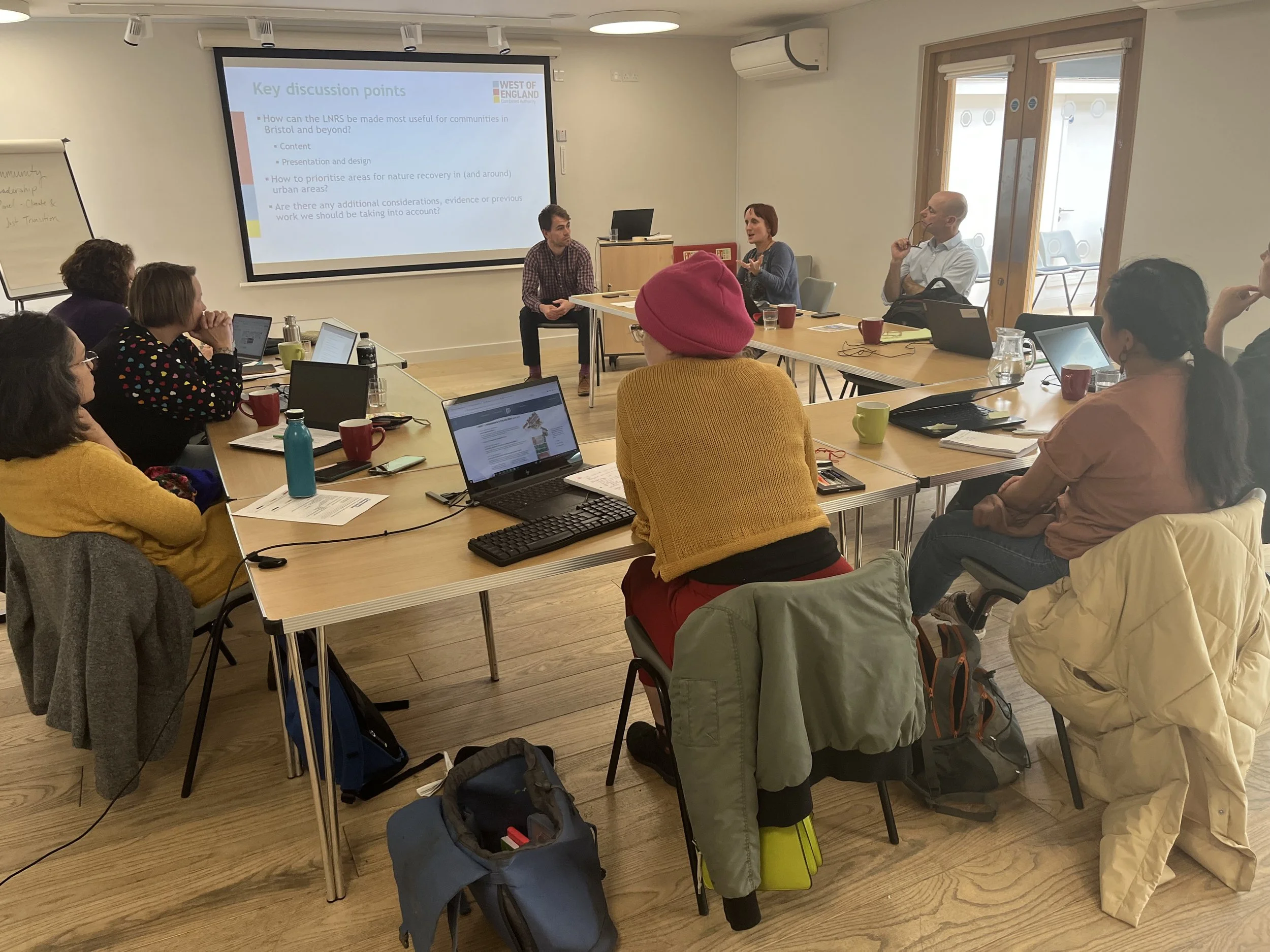
There are so many people in Bristol who have skin in the game when it comes to the climate and social issues. There are leaders who know what challenges face their communities, and are working to overcome them. So why do they often not have a seat at the table?
To effectively get the perspectives of communities heard in local government, Bristol Climate & Nature Partnership started a project to bring the expertise of Community Leaders into city decision-making processes. The Community Leadership Panel on Climate and Just Transition is part of the second phase of the Community Climate Action (CCA) project, a wider program which aims to empower communities to take climate action and demand better for their communities. The Panel takes inspiration from the Bristol Advisory Committee on Climate Change and the Design Review panel at Design West. Praxis has also worked with the CCA project on an Inclusive Transport Vision, which collected ideas from a range of Community Climate Action plans including the Disabled People’s plan.
The end goals of the Community Leadership Panel on Climate and Just Transition were to:
Create a group of community leaders who were skilled and confident in representing their communities to the council, particularly with respect to climate action;
Make the leaders’ voices invaluable to the council so that they are integral to the city’s decision-making; and
Extend the experiences of making the panel beyond the leaders themselves, to their communities and to other places.
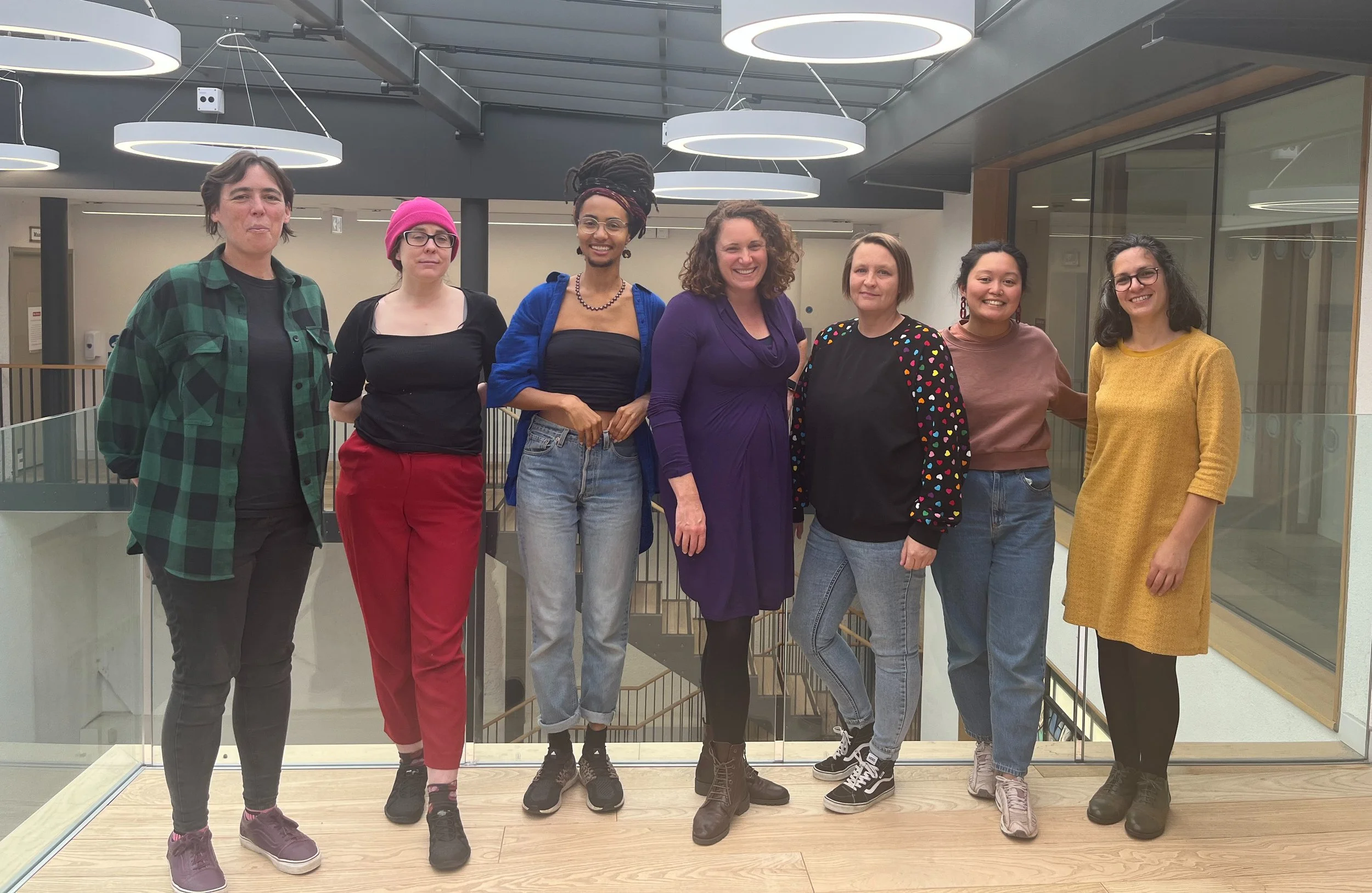
Seven of the panel members
Creating the panel and training the leaders
Bristol Climate & Nature Partnership asked us to get involved with creating the Community Leaders Panel on Climate and Just Transition based on our previous work on how to embed the voices of local people within city council structures with the Bristol City Leap project. To support Bristol Climate & Nature Partnership to set up the panel, we offered our expertise on participatory democracy: we led workshops to design the panel structure with community leaders, and we gave advice about the panel structure, focusing on what will make the panel legitimate and effective.
Some of the panellists had been a part of forming Community Climate Action Plans in the first phase of the project, so they have specific expertise about the needs and priorities of their communities. With Bristol Climate & Nature Partnership, we co-developed the training for the community leaders on how to build on their existing skills to engage with local government, such as the structures of the One City boards and emerging committee system. We also suggested Open Edge as potential inclusivity trainers, and worked with Open Edge to tailor the training to the Panel’s needs and purpose.
Building the panel into council decision-making
Alongside training the Community Leaders, goal number two was to build the panel into the council’s decision-making structures. By demanding their inclusion in those discussions, Bristol Climate & Nature Partnership emphasised just how important their voices are, creating a formal route through which those making climate policy decisions can engage consistently with community leaders.
Inclusion of a diversity of voices is particularly important at earlier stages of policy development, so these links provide a chance for policymakers to consult community leaders to gain broader insights. This formal route also gives community leaders a way to be paid for their knowledge and the time they spend consulting with the council, pointing again to the importance of their experiences and leadership.
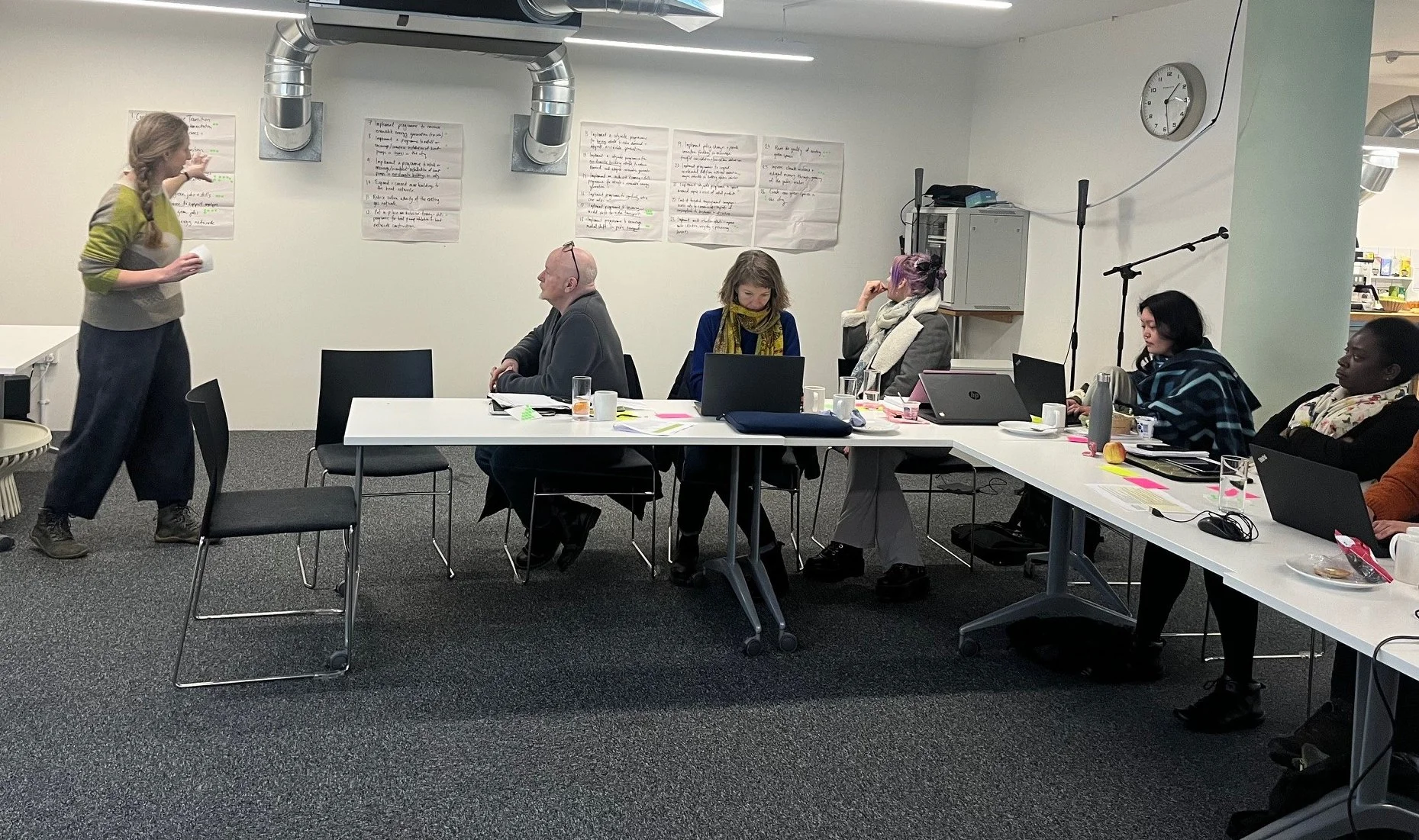
Reviewing a proposal
Extending the values and learnings of the panel outwards
Bristol Climate & Nature Partnership’s third goal was to make sure these changes had a long-lasting effect, by extending the values and structures of the panel beyond those leaders themselves. The panel acts as a model for other community organisations and government authorities, so leaders’ voices from a broad range of communities are heard in every discussion in Bristol and beyond.
Throughout this project, we supported Bristol Climate & Nature Partnership to receive feedback from the community leaders about their experiences of being part of the panel, feedback which then informed the structure of the panel moving forwards. For example, Bristol Climate & Nature Partnership have used our reports to create case studies of the Panel which demonstrate the importance of speaking with community leaders, and so can be used to encourage the council to involve the Panel at every stage of decisions.
Next steps
To start extending the model of the Community Leaders Panel beyond Bristol’s borders, we’re involved in the third phase of Bristol Climate & Nature Partnership’s Community Climate Action project, extending it into the wider West of England. This will help to put more local people in the seats at the table in their areas, and to be confident when they’re there.
The Community Climate Action Project was funded by the National Lottery Fund.