
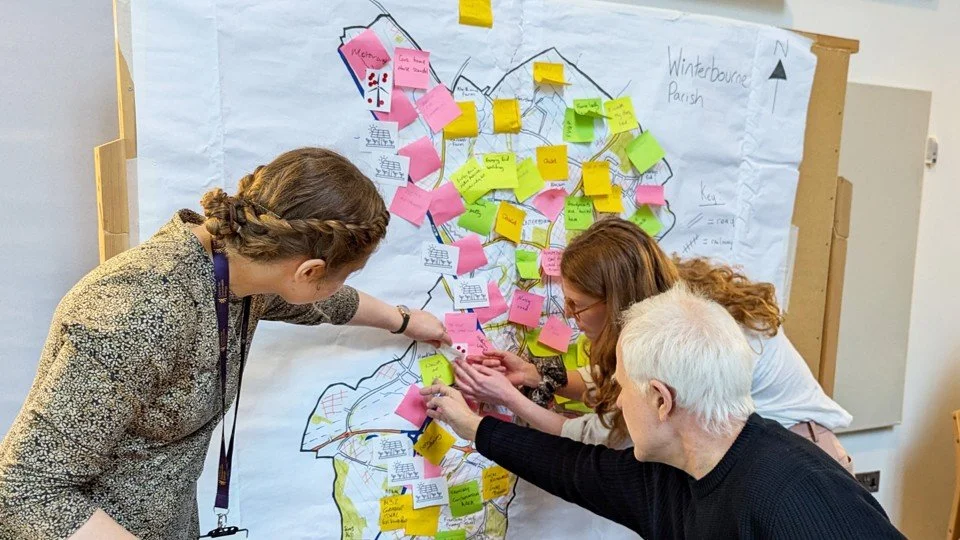
There is widespread support for renewable energy nationally. We worked with communities to explore how renewable energy in their parishes could serve them.
Support for renewables is at an all time high, but renewable energy projects can face local resistance. We worked with the Centre for Sustainable Energy to evaluate their participatory approach to imagining local renewable energy in the landscape.
Despite widespread support for renewable energy, projects are often resisted at a community level. The theory of, say, solar farms seems much more attractive than a proposal in your area.
‘Future Energy Landscapes’ (FEL) is a community workshop designed by the Centre for Sustainable Energy (CSE). It gives community members the time and information to develop an energy vision for their parish. FEL was initially developed in 2015, and is being tested in an extended version across multiple areas of the South West in 2026. Praxis is the learning and evaluation partner for the project.
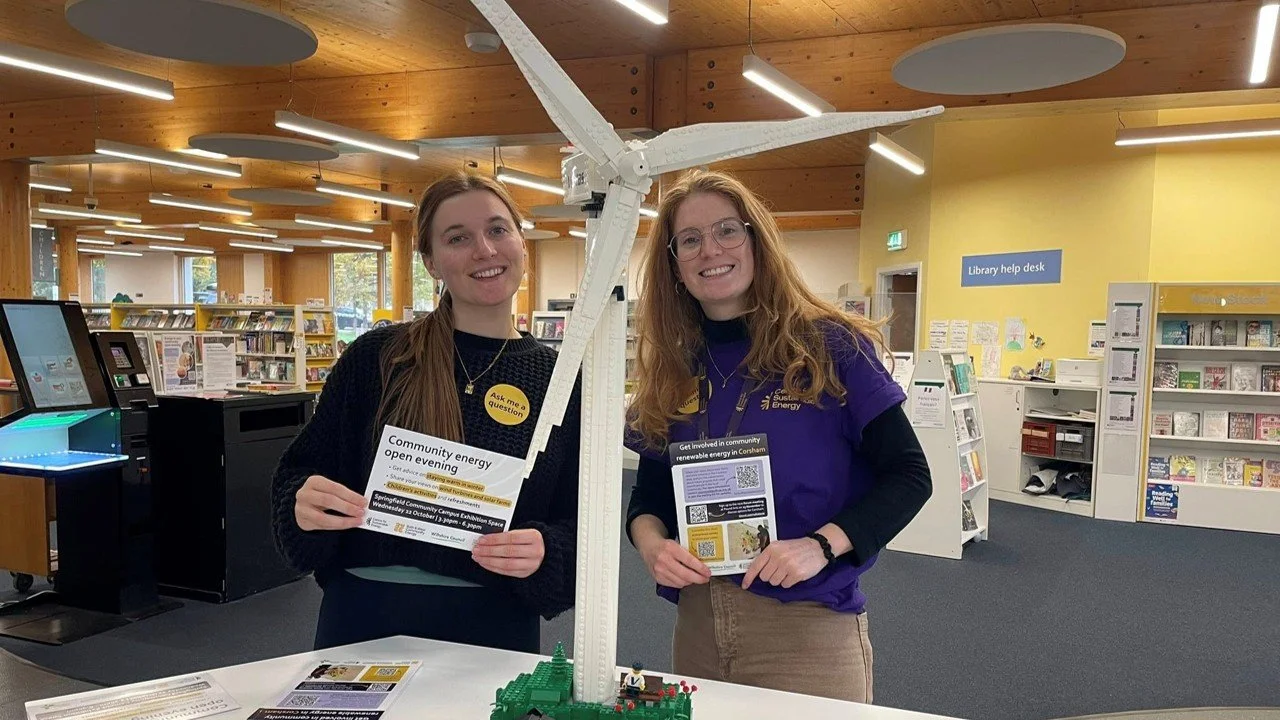
The Centre for Sustainable Energy provide accessible, technical information.
The Future Energy Landscapes workshop
The FEL workshop is an interactive discussion of renewable energy options within one or two parishes. Local residents discuss their feelings about different parts of the local landscape, and a local community developer provides technical information about feasible options for wind and solar farms. After the workshop, CSE shares the views that residents expressed in the workshop with other local residents through a survey.
This project is taking place across Wiltshire, Forest of Dean, South Gloucestershire, Bath and North East Somerset, and North Somerset. CSE has partnered with a local community developer and the local councils in each of these areas.
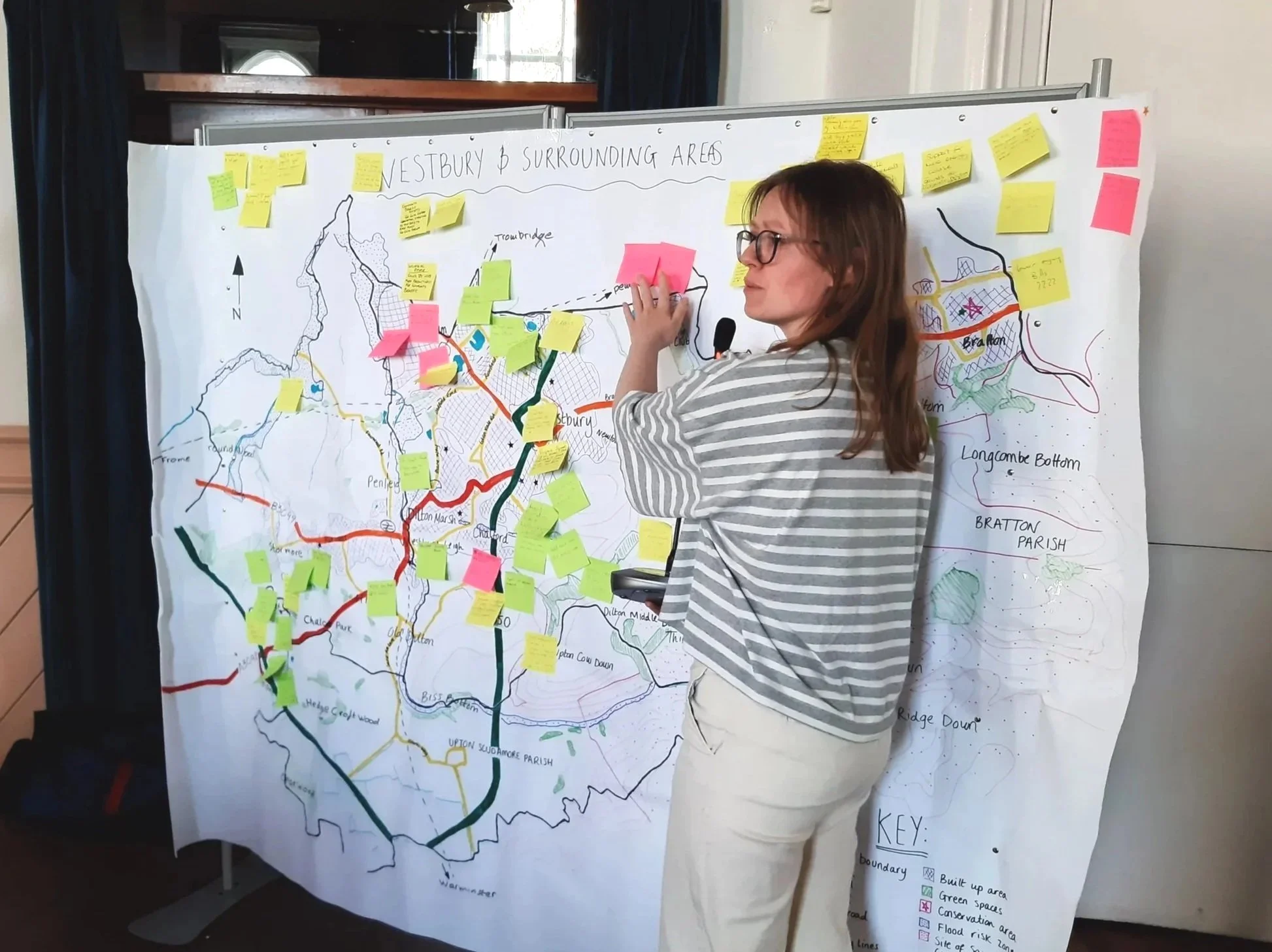
Residents map the local areas they like and think could improve.
CSE and the project partners are now trialling a new approach to the FEL workshop to include a second part. Part 2, called “FEL+” is offered in those communities where there is some interest to take things further. Here, CSE collaborates with the local community energy developer to explain how community energy works and take the next step in selection of locations to investigate a renewable energy project in more detail.
The workshops use maps, calculator tools, feasibility checklists and presentations to inform discussion.
Praxis’ role
Praxis acted as learning and evaluation partner for the project. The first phase of our learning and evaluation included interviews and a workshop with all project partners - including CSE, the local community developer, and the local councils. From the interviews and workshop, we developed an initial theory of change for FEL, against which we could evaluate the actual workshops later.
Praxis associate Ben played a key role in the team attending FEL workshops at multiple stages in the process and across multiple areas as observers. We were able to provide early feedback to CSE to inform the ongoing development of the project, as well as getting information for our final evaluation. We balanced our role as collaborative ‘learning partner’ with providing an external perspective as evaluator. We also asked project partners to feed in their experiences and reflections on the project.
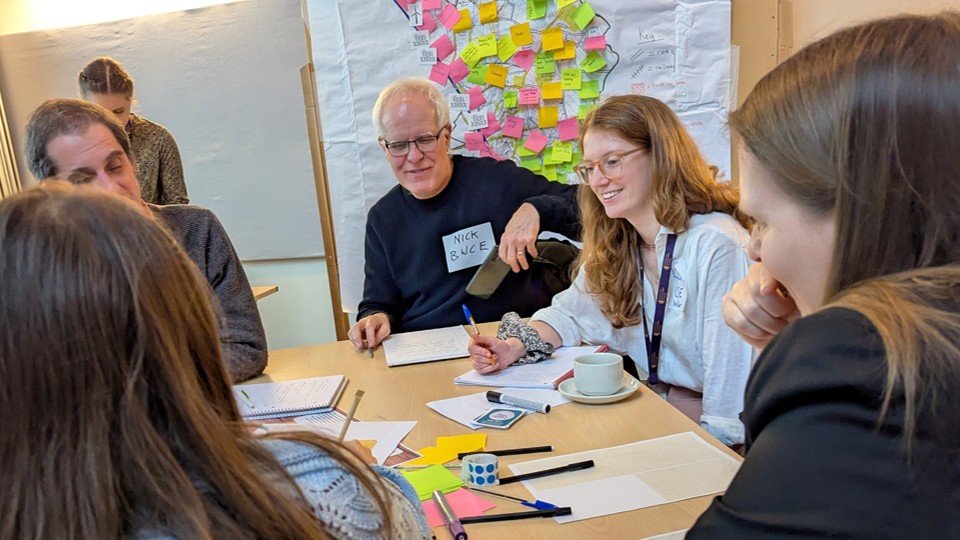
Residents imagine how to integrate sustainable energy into their area.
The final stage of the evaluation is to share the findings from the observations, interviews and workshops in a collaborative analysis workshop. This brings together the project partners to sense-check Praxis’ interpretations and ensure the final report takes into account their experiences of the project as well as Praxis’ interpretations.